

FOX CARBOND® PLATE is a carbon fibre reinforced polymer (CFRP) plate developed for structural strengthening projects, used to increase the load-bearing capacity of reinforced concrete, steel and timber structural elements, featuring a high modulus of elasticity and tensile strength.
 No image
 Product Description
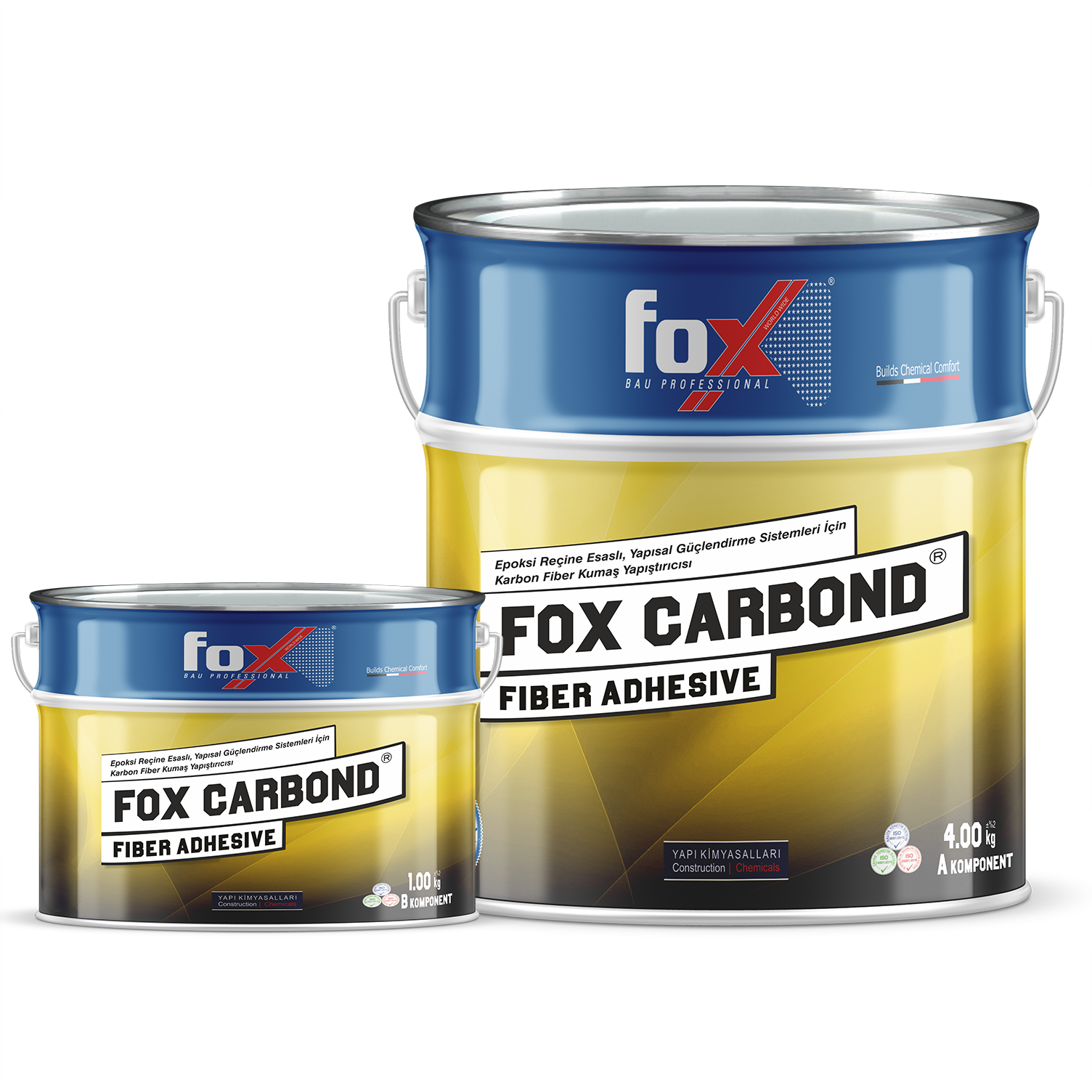
FOX CARBOND® PLATE is a carbon fibre reinforced polymer (CFRP) plate system developed for structural strengthening projects. It is used to increase the flexural and shear capacity of reinforced concrete beams, slabs, steel and timber structural elements. With a modulus of elasticity of 165,000 N/mm² and a tensile strength of 3,000 N/mm², it delivers high mechanical performance. Its thickness of 1.2–1.4 mm and width options of 50–100 mm allow it to adapt to different project requirements. It enables effective strengthening with virtually no additional load on the structure. It is used together with FOX CARBOND® PRIMER and FOX CARBOND® PLATE ADHESIVE.
Key Benefits
- Offers much faster and easier application compared to steel or reinforced concrete jacketing systems, reducing labour and time.
- Its extremely lightweight nature adds no additional load to the existing load-bearing system.
- In the strengthening of structures such as bridges and viaducts, there is no need to close the structure to traffic, allowing continuous use.
- In the strengthening of industrial facilities, the production process is maintained with partial arrangements.
- With high tensile strength (3,000 N/mm²), it effectively increases the load-bearing capacity of structural elements.
- With its low water absorption rate (<0.1%) and high hardness properties, it provides a long-lasting and durable strengthening solution.
Advantages
- Applied much faster and more easily than steel or reinforced concrete jacketing systems.
- Due to their light weight, they add no additional load to the structure.
- In the strengthening of structures such as bridges and viaducts, there is no need to close the structure to traffic.
- In the strengthening of industrial facilities, the structure may remain operational with partial arrangements.
- It is an economical solution.
- They have high tensile strength.
- They provide an increase in load-bearing capacity.
Usage Areas
- For flexural and shear strengthening of reinforced concrete beams
- For flexural strengthening of reinforced concrete slabs
- To limit deflection in beams and slabs with deflection problems
- For increasing the ductility of beams
- Against cross-section losses and corner cracks in slabs with shaft openings
- For flexural strengthening of timber beams
- To resist vibration-induced stresses in slabs subjected to vibration
Application Steps
- 1
Surface Preparation
The surfaces to be treated must be sound, dry, load-bearing, dust-free and clean. The surface must be thoroughly cleaned of all oil, grease, rust and paraffin residues that could weaken adhesion. Surface defects must be repaired with structural repair mortars. The application surface must be primed with FOX CARBOND® PRIMER. Prior to application, the plate must be cut to the dimensions specified in the project.
- 2
Adhesive Application
FOX CARBOND® PLATE ADHESIVE must be applied with a spatula to the smooth surfaces of the fibre reinforced polymer plate (FOX CARBOND® PLATE) to achieve a thickness of 1–1.5 mm. At the same time, FOX CARBOND® PLATE ADHESIVE must also be applied with a spatula to the primed structural surface to the same thickness of 1–1.5 mm.
- 3
Plate Installation
The carbon polymer plates are placed with slight tension in the direction of the fibres, ensuring no air voids remain beneath them. The carbon plates are then pressed with a roller in the direction of the fibres to ensure full contact with the surface, leaving no gaps.
- 4
Protection from Sunlight (When Required)
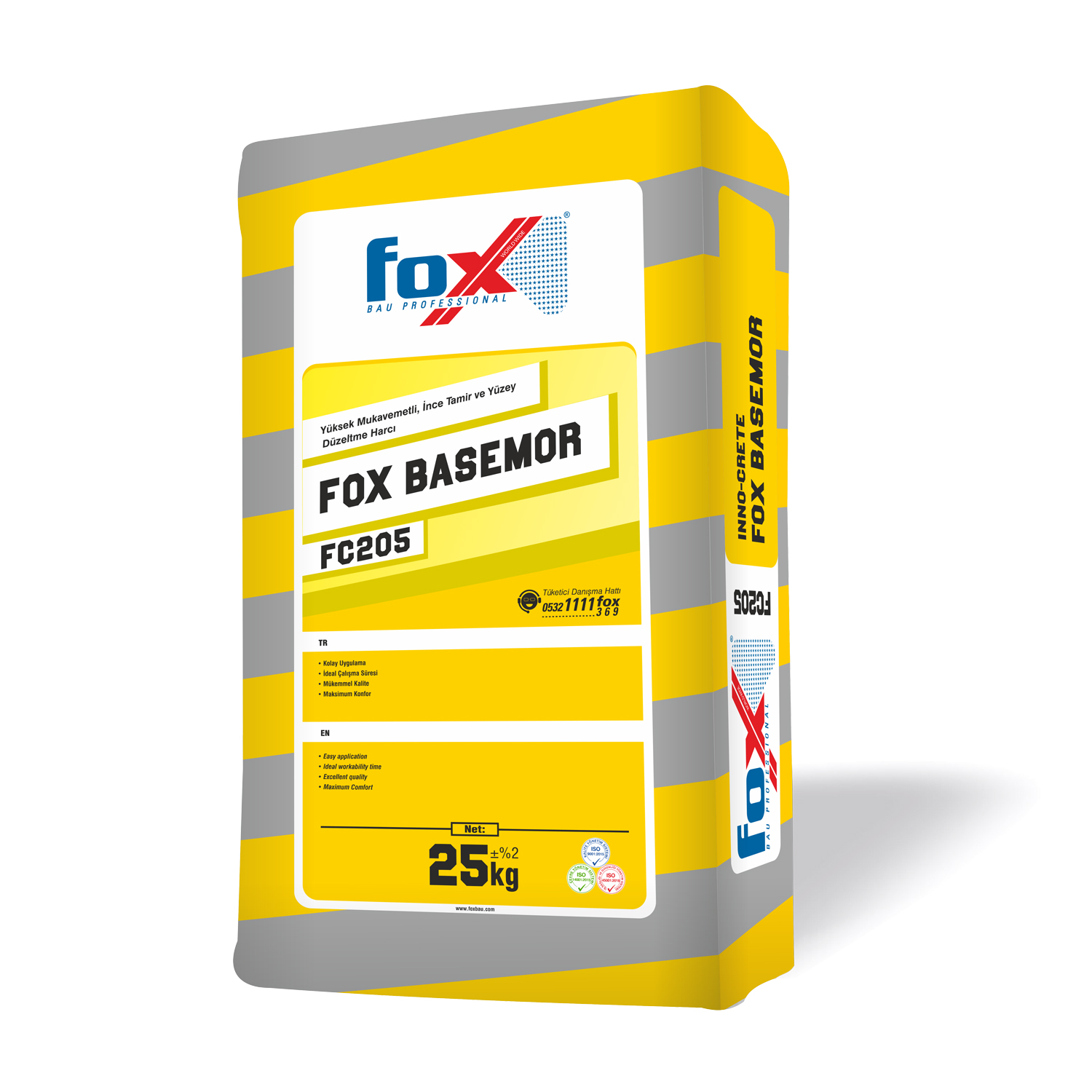
In areas where protection from sunlight is required, the FOX EPOTHANE® PRIMER surface should be sandblasted and covered with FOX BASEMOR FC205 repair mortar.
- 5
Tool and Equipment Cleaning
After application, tools and equipment used must be cleaned immediately with solvent.
Critical
FOX CARBOND systems must be applied by specialist applicators.
Important
Care should be taken to prepare only as much material as can be used within the working time.
Critical
The surfaces to be treated must be sound, dry, load-bearing, dust-free and clean. The surface must be thoroughly cleaned of all oil, grease, rust and paraffin residues that could weaken adhesion.
Important
In areas where protection from sunlight is required, the FOX EPOTHANE® PRIMER surface should be sandblasted and covered with FOX BASEMOR FC205 repair mortar.
Important
After application, tools and equipment used must be cleaned immediately with solvent.
Important
Store in the original unopened packaging in a cool, dry environment, protected from frost. For short-term storage, stack no more than 3 pallets high and dispatch on a first-in, first-out basis. For long-term storage, pallets must not be stacked on top of one another.
Critical
It is dangerous to approach storage and application areas with open flame. Storage and application areas must be ventilated.
Important
During application, appropriate work clothing, protective gloves, goggles and a mask must be worn in accordance with occupational health and safety regulations.
Critical
During storage and application, avoid contact with skin and eyes; if contact occurs, wash immediately with plenty of water and soap; if swallowed, seek medical attention immediately.
Important
Food and beverages must not be brought into application areas. Store out of reach of children.
Information
The above technical values are given at +23°C and 50% relative humidity. Higher temperatures shorten the time; lower temperatures extend it.
Information
When stored correctly at room temperature, away from direct sunlight, between +5°C and +30°C, there is no limitation on shelf life.